
Walking is universally acknowledged as the foundation of human longevity and physical well-being. But what if you could take the 8,000 steps you already walk every day and double your caloric burn, build robust core and back musculature, and stimulate bone mineral density—all without the punishing joint impact of running? Welcome to the rapidly growing fitness phenomenon known as Rucking.
Executive Summary & Research Finding
Rucking vs walking: how weighted backpack walking burns 2x to 3x more calories, builds bone density, protects knees, and powers up your daily StepLeague step score.
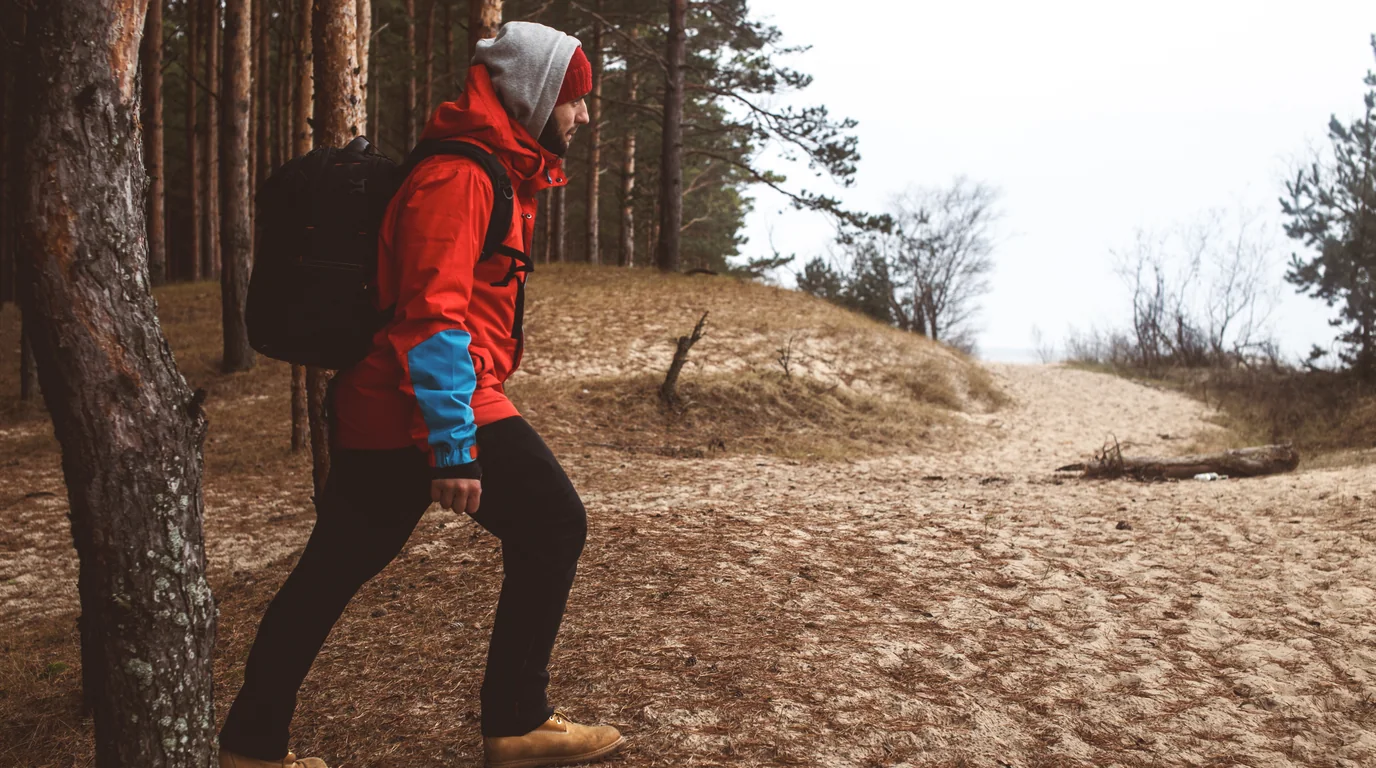
Originally derived from military ruck marches—where soldiers carry weighted rucksacks over long distances—rucking has emerged as a cornerstone of modern functional medicine, championed by longevity physicians like Dr. Peter Attia and bestselling authors like Michael Easter (*The Comfort Crisis*). In this comprehensive breakdown, we examine the clinical science of rucking, compare caloric expenditure against flat walking and running, and explain how to leverage weighted strides to dominate your division in StepLeague.
The Metabolic Math: How Weight Multiplies Caloric Burn (MET Analysis)
In exercise physiology, energy expenditure is measured in Metabolic Equivalents of Task (METs). One MET equals the rate of energy consumed while sitting quietly at rest (approximately 1 kcal per kilogram of body weight per hour). Flat, brisk walking at 3.5 mph corresponds to roughly 3.8 to 4.3 METs. Jogging at 5.0 mph jumps to approximately 7.5 to 8.3 METs.
When you add an external load (such as a 20-pound rucksack or weighted vest) to a walking stride, the metabolic demand escalates dramatically without requiring you to run or sprint. Your cardiovascular system and postural muscles must expend continuous energy to support and stabilize the extra mass against gravity:
| Activity | Average Speed | External Load | Estimated METs | Calories Burned / Hour (170 lb Person) |
|---|---|---|---|---|
| Casual Stroll | 2.5 mph (4.0 km/h) | None (0 lb) | 2.8 – 3.0 METs | 215 – 230 kcal |
| Brisk Walking | 3.5 mph (5.6 km/h) | None (0 lb) | 3.8 – 4.3 METs | 310 – 345 kcal |
| Light Ruck | 3.2 mph (5.1 km/h) | 15 lb (~8% bodyweight) | 5.5 – 6.2 METs | 440 – 495 kcal |
| Standard Military Ruck | 3.5 mph (5.6 km/h) | 30 lb (~17% bodyweight) | 7.2 – 8.5 METs | 580 – 680 kcal |
| Moderate Jogging | 5.0 mph (8.0 km/h) | None (0 lb) | 7.5 – 8.3 METs | 600 – 660 kcal |
The clinical takeaway is profound: **A 30-pound ruck walk burns virtually the same calories as a 5.0 mph jog**, while subjecting your knee and hip joints to less than one-third of the peak ground reaction forces.
Joint Biomechanics: Why Rucking Protects Knees While Running Pounds Them
Running is an aerial phase exercise: for a split second between strides, both feet leave the ground completely. When your lead foot lands, your knees, ankles, and spinal discs absorb an impact shockwave equal to **2.5 to 3.5 times your total body weight**. Over a 5-mile run, that equates to hundreds of tons of cumulative force passing through your patellar tendons and meniscus.
In contrast, rucking is a true walking gait: one foot is always in contact with the earth. This eliminates the aerial drop impact. Even with a 25-pound backpack, the ground reaction force of a ruck step rarely exceeds 1.3 to 1.5 times body weight. For individuals over 40, people recovering from knee injuries, or anyone carrying extra body fat, rucking delivers the cardiovascular benefits of running with the orthopedic safety of walking.
Bone Mineral Density and Posture: The Anti-Aging Superpower
Modern humans spend an average of 9 to 11 hours per day seated in forward-head, kyphotic postures—slumped over laptops and staring down at smartphones. This weakens the posterior chain (rhomboids, rear deltoids, erector spinae, and glutes) and promotes osteopenia (bone loss).
- Wolff's Law and Bone Remodeling: Bone adapts dynamically to mechanical load. The axial loading of a backpack sends piezo-electric signals through the femur, hips, and lumbar vertebrae, stimulating osteoblast activity and increasing bone density.
- Active Postural Correction: A properly fitted rucksack pulls the shoulders backward and downward into anatomical retraction. To stay balanced, your spinal erectors and core muscles must engage continuously, actively reversing the 'desk worker slump'.
Beginner Rucking Protocol (The 10% Rule)
Never start with heavy military loads. Begin with roughly 10% of your body weight (e.g., 15 lbs for a 150 lb person, 20 lbs for a 200 lb person). Walk for 20 to 30 minutes twice per week, keeping your pace between 3.0 and 3.5 mph. Increase weight only after 4 weeks of pain-free adaptation.
Tracking Ruck Steps Accurately on iPhone & StepLeague
Does carrying a heavy backpack alter your iPhone's step counter? Because rucking reinforces heel-to-toe ground contact and produces a powerful pelvic drive, your iPhone's CoreMotion accelerometer tracks ruck steps with exceptional precision. In fact, the slight additional impact spike makes ruck steps *easier* for digital filters to distinguish from casual fidgeting.
By logging your ruck walks into StepLeague, you gain an immense competitive advantage. While your rivals in your weekly division are slowly accumulating steps on flat pavement, your steps are building muscle, torching twice the calories, and driving you up the global and regional leaderboards.
Frequently Asked Questions
Should I use a weighted vest or a rucksack backpack?
Both work well. Weighted vests distribute weight evenly across the chest and back, making them ideal for brisk walking or treadmill incline walks. Backpacks (rucks) place weight strictly on the back and hips, providing superior posterior chain engagement and posture correction.
Will rucking hurt my lower back?
When done properly with modest weight (10% to 15% of body weight) held high and close to the spine, rucking actually strengthens the erector spinae and relieves chronic lower back pain. If you experience pain, reduce the weight immediately and ensure the bag does not sag below your lumbar curve.
Zone 2 & Heart Rate Zones Calculator (Karvonen & Tanaka Formula)
Calculate your clinical maximum heart rate, Heart Rate Reserve (HRR), and precise BPM ranges for maximum mitochondrial fat oxidation.
All 5 Cardiovascular Training Zones:
Steps to Calories, Distance & Fat Burn Calculator
Estimate exact energy expenditure, walking distance, and Zone 2 fat oxidation based on your steps.
Steps & Distance Needed to Burn Target Calories / Fat
Input your desired calorie deficit or target grams of pure body fat to calculate the exact steps, kilometers, and walking duration required.
Body Mass Index (BMI) & Healthy Weight Calculator
Calculate your clinical Body Mass Index and healthy weight bracket according to World Health Organization (WHO) standards.