Every successful fat loss plan comes down to a fundamental law of thermodynamics: energy in versus energy out. However, focusing solely on total calories ignores body composition. If you drop calories too low without adequate protein, up to 30 percent of the weight you lose will come from metabolically active lean muscle rather than body fat.
Tracking macronutrients (proteins, carbohydrates, and dietary fats) ensures that the weight you lose is pure stored fat while your muscle mass, thyroid function, and daily energy levels stay protected.
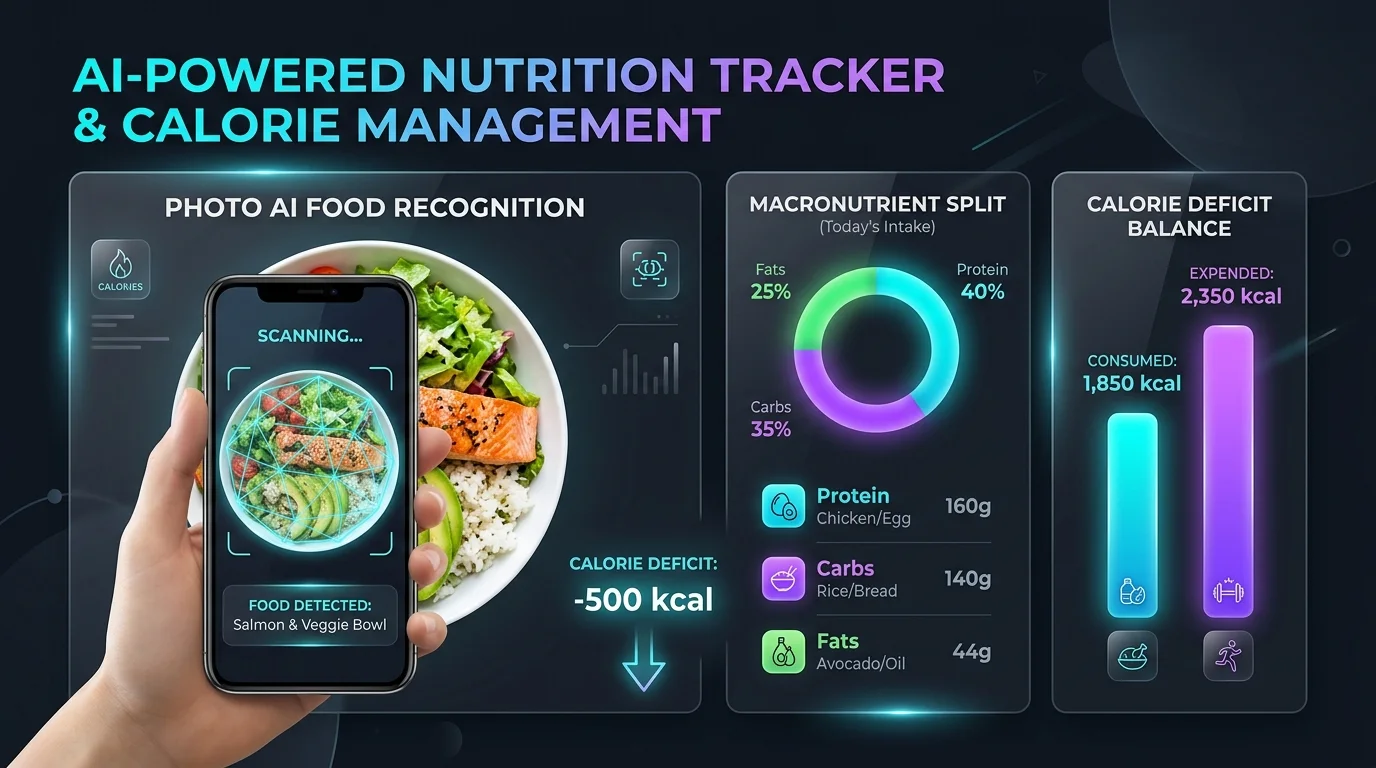
Step 1: Calculate Your Baseline Energy (TDEE)
Before adjusting food intake, determine your Total Daily Energy Expenditure (TDEE). This is the sum of your Basal Metabolic Rate (calories burned at complete rest) plus physical activity and the thermic effect of food.
- For Fat Loss: Subtract 300 to 500 calories from your maintenance TDEE. This creates a sustainable deficit that yields roughly 0.5 to 1.0 pound of pure fat loss per week without triggering severe hunger signals.
- For Muscle Gain: Add 200 to 300 calories above maintenance to fuel protein synthesis with minimal fat accumulation.
- For Body Recomposition: Eat at exact maintenance while lifting weights and optimizing daily protein intake.
Step 2: Understand the Three Macronutrients
Each macronutrient plays a distinct biological role and yields a specific amount of energy per gram:
1. Protein (4 Calories per Gram)
Protein is the most critical macronutrient during a calorie deficit. It has the highest thermic effect of food (TEF), requiring your body to burn up to 25 percent of its calories just to digest it. Aim for 0.7 to 1.0 gram of protein per pound of target body weight (1.6 to 2.2g per kg) to prevent muscle breakdown.
2. Dietary Fats (9 Calories per Gram)
Fats are essential for hormone production, including testosterone and estrogen, as well as fat-soluble vitamin absorption (A, D, E, K). Never drop dietary fat below 20 percent of your total daily calories. Prioritize monounsaturated and polyunsaturated fats from olive oil, avocados, nuts, and wild fish.
3. Carbohydrates (4 Calories per Gram)
Carbohydrates are your brain and central nervous system's preferred fuel source. They replenish glycogen in muscle tissue to power intense workouts. After calculating your protein and fat targets, allocate your remaining daily calories to quality complex carbohydrates.
Recommended Macronutrient Splits by Goal
| Goal | Protein % | Carbs % | Fats % | Primary Focus |
|---|---|---|---|---|
| Sustainable Fat Loss | 35% | 40% | 25% | Preserve muscle, curb appetite, high satiety |
| Lean Muscle Hypertrophy | 25 - 30% | 45 - 50% | 20 - 25% | High glycogen availability for heavy resistance training |
| Low-Carb Metabolic Reset | 35% | 20% | 45% | Improve insulin sensitivity, steady daytime energy |
| Endurance Performance | 20% | 55% | 25% | Maximum aerobic endurance and glycogen replenishment |
The Hidden Traps That Ruin Manual Calorie Counting
Studies published in the New England Journal of Medicine indicate that individuals who manually log meals underreport their caloric intake by an average of 47 percent and overreport physical activity by 51 percent.
- Unmeasured Cooking Fats: A single unmeasured tablespoon of olive oil or butter in the pan adds 120 untracked calories.
- Liquid Calories and Condiments: Salad dressings, coffee syrups, and sauces quickly add 200 to 400 hidden calories daily.
- Manual Logging Fatigue: Typing every ingredient into complicated search bars leads to missed logs and abandonment after 10 to 14 days.
Modern Fix: AI Photo Recognition
Rather than typing out six individual ingredients for a salad or stir-fry, modern AI computer vision can scan a photo of your plate, identify portion sizes, and calculate macro totals in three seconds.
How to Start Tracking with Zero Stress
Consistency beats perfection. Instead of stressing over hitting exact gram targets to the decimal point, aim to stay within plus or minus 10 grams of your protein goal and within 100 calories of your daily target.
Using an intuitive tool like Calorie Counter Meal Tracker or visiting the official web engine at calorie-tracker.net streamlines your daily nutrition by letting you log meals instantly by photo, track macro ratios with clear visual rings, and monitor long-term weight trends effortlessly.
Daily Calorie Needs & Macronutrient Calculator (TDEE)
Determine your precise Basal Metabolic Rate (BMR), Total Daily Energy Expenditure (TDEE), and target protein/carb/fat grams.
Daily Protein & Leucine Target Calculator
Calculate evidence-based daily protein targets and per-meal leucine thresholds ($2.7 ext{g}+$) to maximize muscle preservation and hypertrophy.
Per-Meal Protein Distribution & Food Sources:
US Navy Body Fat Percentage & Lean Mass Calculator
Calculate clinical body fat percentage, lean body mass (LBM), and fat mass using US Department of Defense circumference formulas.
Resting Metabolic Rate & Inactive Daily Burn Calculator
Calculate how many calories your body expends 24/7 simply breathing, circulating blood, and maintaining vital organs while doing nothing.
Body Mass Index (BMI) & Healthy Weight Calculator
Calculate your clinical Body Mass Index and healthy weight bracket according to World Health Organization (WHO) standards.